Enemies make Zohran Mamdani out to be a monster. But since when are monsters so funny?
The second part of my conversation with strategist Dana Houle.

The thing about the “democratic socialism” of New York Assemblyman Zohran Mamdani is that it’s a debate. He has his understanding of what that term means. His opponents in New York City’s mayoral race have theirs. But there’s one thing that’s indisputable – the man is charming.
It’s a rare political talent that can make people laugh or smile or grin, especially in spite of themselves. But that’s what Mamdani does, on the regular, in videos released by his campaign that go viral. I don’t live in New York. I don’t have skin in the game. Yet here I am, enchanted.
And I’m laughing. The latest video has Mamdani explaining why it’s important for politicians to listen, not only to supporters but “critics,” too – by which he means racist Twitter trolls who tell him to go back to Uganda. (He was born there to parents of Indian descent; they came to the US when he was 7.) Then he draws inspiration from that to suggest headlines for the New York Post, the daily owned by Rupert Murdoch that regularly attacks him for being a Muslim democratic socialist.
I’m making the video seem more serious than it is, because explaining a joke takes the fun out of it. Watch the whole thing. You’ll thank me.
https://bsky.app/profile/zohrankmamdani.bsky.social/post/3lufp7ztaes2z
My larger point is serious, though. There are powerful forces lining up against Mamdani, some inside the Democratic Party, despite the fact that he won the primary handily. Virtually all of them want to make Mamdani out to be some kind of monster, either a Marxist-Leninist who desires the confiscation of all private property or an antisemite who aims to terrorize New York City the way Hamas terrorizes Israel.
They are doing this, because fearmongering works, especially with general-election voters who are, let’s face it, not really engaged or informed. For them, politics is more about vibes than substance. Mamdani is a Muslim. He’s a “democratic socialist.” From the start, there’s a lot to work with if you’re a fascist billionaire or a white-power nativist, two groups that are proudly served by the New York Post.
But it’s because politics is entertainment to the relatively unengaged and uninformed voters who determine the outcomes of general elections that a man like Zohran Mamdani has an advantage. Call him what you will – he’s a communist! he’s a terrorist! – but fact is, he’s funny, and a man who can make you laugh or smile or grin, especially in spite of yourself, is a man who can’t be a monster. He just can’t be.
Whatever happens in November, Mamdani represents the changes taking place inside the Democratic Party, between factions that are still looking to the past for answers to the present, and factions that are looking at the present and fearing the worst that’s still to come.
In the second part of our conversation, Democratic strategist Dana Houle puts Zohran Mamdani in the larger context to explain why the Democrats aren’t that old, why they are more confrontational than you think, and why none of the Democrats will abandon the base, namely Black Democrats, even if some of their donors are downright oblivious.
“The people pushing ideas that could possibly be viewed as ‘move away from Black Democrats’ are mostly shit-posters, and a handful of shit-posters who pass it off as journalism and who aren't committed Democrats, people like Matt Yglesias or Jonathan Chait or Josh Barro.”
One thing we can say with some certainty is that Zohran Mamdani's primary victory was a good case for generational change. Not only does the party need younger leaders. It needs to reform its own internal structure, namely seniority. How do you see the issue?
Former Governor Andrew Cuomo is actually a little young to fit into one of our big problems: people born 1940-1950 who keep running for office. There are exceptions to the rule, of course, but in general, I don't think people should be in office when they're in their 80s. And I don't think it's a big problem except in Congress. But it's a problem.
But it's also a product of successes and the distribution of votes. Republicans don't have as many older members, because they lost so many incumbents in 2006-2008 and in 2018, and because of redistricting, and because just about any Republican who cared about governance bailed. There are a lot of elderly Democrats, because they get elected in very Democratic cities and then keep winning primaries.
Outside of Congress, who are the Democratic leaders? Mostly governors, and/or state leaders who appear on MSNBC. They're young, some very young. I think it's a congressional problem, and has been a presidential problem, but we just ran a ticket of two people [Kamala Harris and Tim Walz] who were teens when The Breakfast Club and Pretty In Pink came out.
Why aren’t the Democratic leaders in the Congress more confrontational? There seems to be an assumption that there's nothing being done that can't be undone by the next election -- when there are things lost that may never come back, like public trust. These same leaders said Trump was an existential threat.
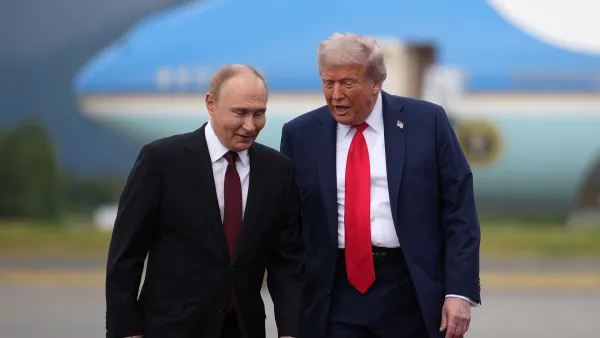
First, what we're confronting is different than anything before it. It's not George W Bush and Denny Hastert. It's a guy in office in part because of Vladimir Putin, who has turned the government into a cabal of demented and hateful miscreants contemptuous of democracy. We don't have experience of dealing with that nationally, and only in a handful of states like Wisconsin, North Carolina and Florida.
Second, the assumption that nothing is being done is because a) there's not much that can be done procedurally under the Capitol dome, and b) there are a bunch of people on social media describing supposed silver bullets that Democrats refuse to use.
Fact is, Democrats have denied unanimous consent, including on the Big Barbaric Bill. Hardly anyone knows about that, because all it did was delay things by 12 to 18 hours. Mitch McConnell screwed Democrats by preventing them from passing legislation they cared about. But Democrats can't really screw Republicans if Republicans aren't trying to pass any legislation except through reconciliation, and the White House is running the country like a monarchy with a meaningless legislature (because Republicans are rolling over).
And because everything is being run from the White House, most cabinet-level appointees are irrelevant. With the few who are (Robert F Kennedy Jr, Russ Vought and Pam Bondi), Democrats have done the maximal opposition, which, like I said, delays things less than 24 hours.
And there's one other important factor: Most elected officials are constitutionally averse to big risks. Some things they know aren't risks (like 202 of 204 representatives and all 47 senators voting against the trans athlete bill). But the one opportunity to squeeze Trump was the continuing resolution, and obviously there were quite a few senators who thought it was too risky to shut down the government. I thought it was worth the risk, but obviously several senators didn't.
There is a debate among Democrats about a split between the base -- which is to say, Black Democrats -- and elites, which is to say, people like George Clooney and Wall Street types. The way things are going, it seems the elites want to move away from Black Democrats. That way the party would be more “appealing to independent voters." Is this real? If so, how real? And how will it impact future elections?
I'm not sure it's real. Wall Street types think moderating is done through tax policy. They don't want to dump on trans kids or outlaw abortion or teach that the earth was formed 4,000 years ago. That’s because what their non-Democratic friends complain about is taxes.
The people pushing ideas that could possibly be viewed as "move away from Black Democrats" are mostly shit-posters, and a handful of shit-posters who pass it off as journalism and who aren't committed Democrats, people like Matt Yglesias or Jonathan Chait or Josh Barro.
There's a related and very important point: A lot of big donors are super-liberal/progressive, and think Democrats should be super-confrontational. One of the things you learn when you work on statewide or congressional races is that most big donors are smart people who actually care, but would be absolutely horrible campaign operatives or elected officials. Their sense of what non-wealthy people think is often very dumb, and a few are even condescending.
As for future elections, this is the eternal struggle, for both parties, and the material for a lot of political science. Who do you have in the bag, who do you have but need to motivate, who's likely to vote but persuadable, who's unlikely to vote but not persuadable, who does the other party need to motivate, and who do they have in the bag?
And it's not a line from liberal to conservative, with the battle in the middle, like the flag in the middle of the rope in tug-of-war. It's a gigantic set of Venn diagrams of demographic and regional and interest groups. And you win elections by figuring out how you get the most groups. And Democrats can win without appealing to Black voters if they're running in Oregon or Vermont.
But there's no way they would or could successfully write them off if they're running in pretty much any contested state other than New Hampshire. And most of them wouldn't. Most Democrats are committed to racial justice and to equitable representation.
Join the board!
I’m asking for help. I need those of you who open every free edition of the Editorial Board to step up and become a paying subscriber. Will you join me today and keep this humble enterprise going? Thanks! –JS
CLICK HERE TO SUBSCRIBE FOR JUST $6 A MONTH!
Click here to leave a tip. $10? Thanks!