Want better politics? Make community first.
Let’s get 90 million Americans off the “couch.”

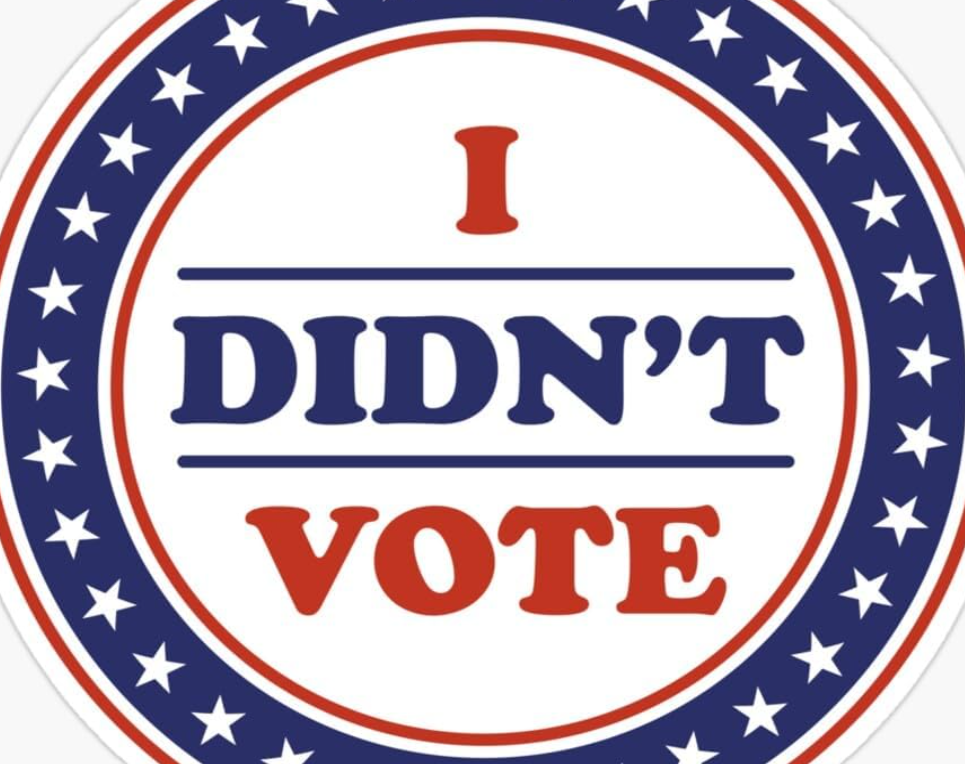
In Tuesday’s edition, I said liberals should face the fact that the Democrats can’t do it alone. The viability of democracy requires some Republican buy-in. I said “liberals have to work more to create conditions in which the Republicans choose to behave.”
About those conditions.
I didn’t mean taking a phony middle position on something like immigration to appear moderate compared to a blood-and-soil Republican. I have said before and will say again: accepting lies as if they are true is not centrism. It’s just another form of deceit. There’s no reward in it. Most voters can tell it’s fake.
What I had in mind was something Professor Matt Seyhold of Elmira College told me in my recent interview with him. We must expand the tent of freedom to beat “totalitarian kleptocracy,” he told me. To do that, we must include “a whole lot of dumbasses.”
Those are the conditions liberals should work to create.
How do we bring in the “dumbasses”?
First, Professor Seybold said, by recognizing that nonvoters decided the election. About 90 million eligible voters stayed home on Election Day. He and his colleagues call that “couch.”
“Couch cannot be defeated on a Tuesday in November every couple of years unless couch is being defeated on the regular.”
And how do we do that?
By making community – “take a night course at a local college, join community theater, volunteer at soup kitchen, start a book club,” he said.
“If more people are making community, that’s bad for any politics which depends on feelings of isolation, fear and powerlessness,” Professor Seybold told me. “A precondition to political empowerment is simply feeling seen and heard.”
He went on:
“If you want better electoral outcomes, but you don’t want to try to ‘convert Trump voters,’ just make community. My greatest hope for the 2020s has nothing to do with Donald Trump. My hope is that we all win a lot more days against couch. If that happens, our politics will start looking a lot more sane.”
Matt Seybold is a professor of American literature at Elmira College in upstate New York. He’s also a Mark Twain scholar and the host of a Twain-inspired podcast called The American Vandal.
In the first part of our two-part conversation, Professor Seybold explained at length what he meant by “dumbasses.” He meant Americans who just don’t know any better as well as Americans who do know better but can’t or won’t do anything about it.
In this second part, he focuses on a solution to each.
Your comment [about dumbasses] speaks to the problem of hope. At least my problem. America saw Trump, didn't like him, threw him out. Then we put him back in. And the dumbasses were central to that. Why should I put my faith in them?
By Mark Twain’s definition, hope is precisely what “the facts refuse,” and it is the only remedy to suicidal depression - from which he himself suffered - in the face of the “incurable disease” of our mortality.
For my part, I will simply argue the dumbasses didn’t put Trump back in office nearly so much as the kleptocrats did.
And, so long as our system of free and fair elections holds, the project of making fewer dumbasses and defeating kleptocracy will be the same project. Intelligence is just access to information, the existence of expertise, and the time and wellbeing necessary to avail oneself of each.
So, if we turn our attention to supporting education, healthcare, journalism and libraries, the project of undumbing is underway.
It has been said that Trump's abuse of power -- what I think of as the ongoing insurrection -- is radicalizing people. It's snapping them out of their ignorance, complacency, apathy. Do you agree? If so, what can liberals do to take advantage of it?
Let’s forgo “taking advantage.” There’s that intrinsic criminality in the language of US party politics again.
I just saw a poll this morning in which the percentage of people in favor of “abolishing ICE,” which was a pretty fringe position under Joe Biden, is now higher than Trump’s approval rating.
If there are people being “radicalized,” we don’t have to worry about motivating them. They don’t need nudging. Being “radical,” whether you see that as a positive or negative, is not compatible with inaction. Your moral urgency compels you.
Hopefully, there are a rather large number of people who, though they will never be radicals, are being broken of their complacency by the events of the past year.
My friend, Anna Kornbluh, is fond of saying, “Donald Trump didn’t win the 2024 election. Couch did.”
Eighty-six million eligible voters decided the difference for them wasn’t great enough to get to the polls. That’s 9 million more than voted for Trump.
Couch cannot be defeated on a Tuesday in November every couple of years unless couch is being defeated on the regular.
If more people are touching grass, if more people are making community, that’s bad for any politics which depends on feelings of isolation, fear and powerlessness.
Getting people to rallies, phone-banks, marches, and explicitly political gatherings is great, but honestly, if they take a night course at the local college, join community theater, volunteer at soup kitchen, start a book club, I think that’s almost as good.
A precondition to political empowerment is simply feeling seen and heard. If you want better electoral outcomes, but you don’t want to try to “convert Trump voters,” just make community.
My greatest hope for the 2020s has nothing to do with Donald Trump. My hope is that we all win a lot more days against couch. If that happens, our politics will start looking a lot more sane.
The phrase "new deal" appears to have come from Twain. Liberals think they know what it means. What did Twain mean? What does his meaning of the word say to our moment?
I’ll just give people some context and they can interpret it for themselves.
FDR got “The New Deal” from A Connecticut Yankee in King Arthur’s Court. The Yankee arrives in feudal Britain, and this is what he says after getting his lay of the land:
QUOTE Here I was, in a country where a right to say how the country should be governed was restricted to six persons in each thousand of its population. For the 994 to express dissatisfaction with the system and propose to change it, would have made the whole six shudder as one man, it would have been so disloyal, so dishonorable, such putrid black treason. So to speak, I was become stockholder in a corporation where 994 of the members furnished all the money and did all the work, and the other six elected themselves a permanent board of directors and took all the dividends. It seems to me that what the 994 dupes needed was a new deal. UNQUOTE
I wish I had said “dupes” instead of “dumbasses.”
Twain’s still a helluva lot better at this than me.
We are living in a kind of dark ages in which fear, ignorance and superstition are encouraged by those in power. What can a regular person do? What do you tell your students?
I don’t talk about contemporary partisan politics barely at all. And not because of the recent witch-hunting of professors either. I never have. But two things have changed about my philosophy of instruction in recent years.
One, I teach as much history as I possibly can, supported by as much primary source documentation as I can, if possible getting students to lay hands on those primary sources, and to think about the media environments of previous eras in comparison to their own.
Two, I try to give students (and myself, frankly) a break from the surveillance. No phones. No laptops. Paper and ink. Chalk and slate. Human voices and human ears. Make community first.
Don’t take it for granted.
Learning will follow.