Trump is 80, sleepy and (maybe) on experimental drugs. Yet the media doesn't see an old man
The Republicans are seen as legitimate. The Democrats are not. That explains the difference between the press corps' treatment of Joe Biden versus Donald Trump.

Editor's update: The AP ran a story Thursday explaining the bipartisan housing bill in fine-grained detail. The bill includes provisions for renters, which is something I did not know until I read the report. The AP story quotes Mike Johnson on the odds of Trump signing the bill, instead of letting it become law without his signature. The House speaker said he was confident that Trump would sign the bill. “The president, when we go through the details of the bill, he’s going to understand that it’s a good product,” he said. If that's the case, why did he not take the opportunity to crow about a law that he can legitimately take credit for? As I suggest below, he might be too deteriorated to recognize what's in his own best interest. –JS
Why did Donald Trump blow up a signing ceremony that would have celebrated the passing of a new housing law that takes aim at the affordability crisis that everyone is talking about? With Congress in session, the bill becomes law whether he signs it or not. So why would the greatest narcissist in the history of presidents pass up a chance to brag about how great he is? Why is he acting like Republican control of the Congress is not his highest priority?
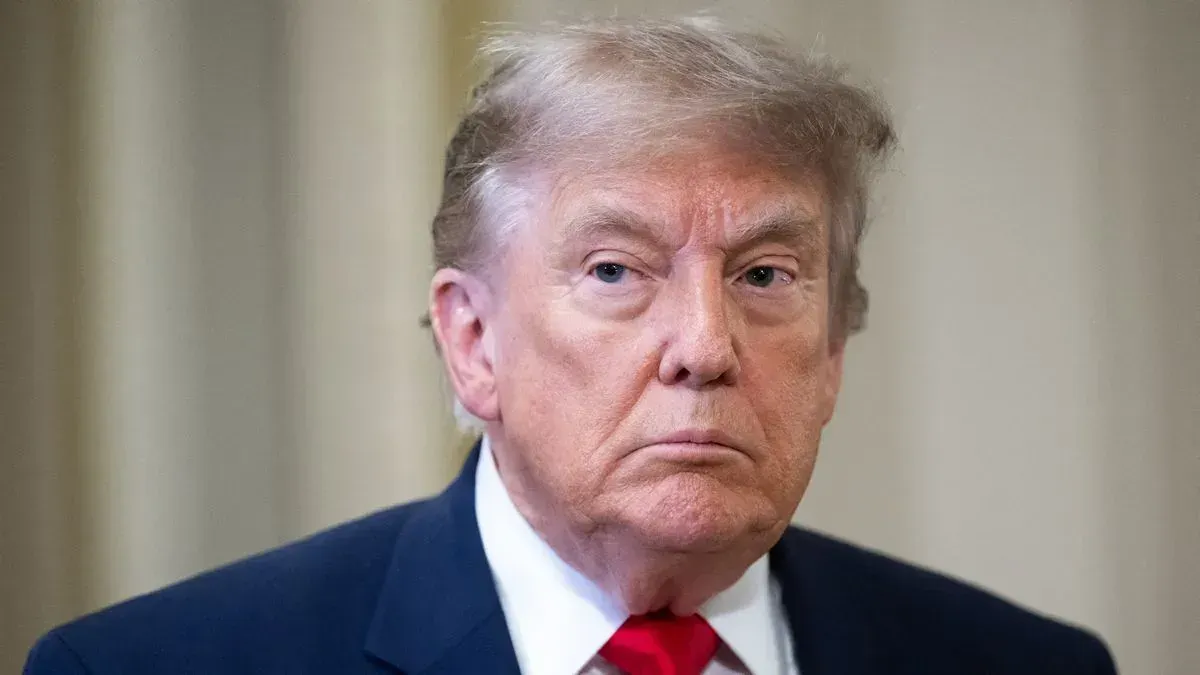
On Wednesday, California Congressman Ted Lieu suggested an answer – that the 80-year-old president no longer has the mental capacity to recognize what's in his own best interest.
"Inflation is up," Lieu said. "Grocery prices are up. Utility costs are up. Housing prices are up. We have a bipartisan housing bill ... There was supposed to be a big signing ceremony today. All of a sudden, Donald Trump decides he’s not coming to sign the bill. Why is that?
"Did he wake up on the wrong side of the bed?" Lieu asked. "Is he unable to stay awake today? What’s causing him to chicken out again? ... Is it the side effects from a drug?
"We don’t know," Lieu said. "This erratic behavior is very concerning. He has trouble staying awake at multiple White House events and Cabinet meetings. He has clearly some weakness in one of his arms. He’s got swelling in his hands. The White House needs to come clean."
 John Stoehr
Lieu then cited a report by Stat that revealed that the FDA has approved access to an experimental drug on a "compassionate use" basis to one person, who was 79 years old in April and whose case was "personally overseen" by a doctor at the National Institutes of Health.
The drug is called retatrutide. It is administrated by injection once a week. Drugmaker Eli Lilly considers it treatment for obesity, Type 2 diabetes, osteoarthritis, sleep apnea and other ailments. Three sources told Stat that the patient, described as "well-connected," wanted the drug to treat refractory obesity with obstructive sleep apnea and pulmonary hypertension.
Donald Trump was 79 in April. He falls asleep during public events. He posts to his social media site at all hours. He's had three "annual" checkups in the last 13 months, one that included an MRI for reasons Trump won't explain. The Post reported recently that for his most recent medical exam, he was attended to by no fewer than 22 doctors. Trump has expressed interest in weight-loss drugs, per the Times. He also has a history of pulling strings to get special access to new drugs, for himself during the covid era, and for friends.
Which brings us back to Lieu. "What we know is a report saying that one person in America got this special new drug. It was a 79-year-old person, very high profile. This drug can only be given to someone under the 'compassionate use' provision, meaning you do that if someone basically has a terminal illness. We need to know did Donald Trump get this special drug from Eli Lilly and did he get it under that provision and if he did, why is that the case?"
If Trump were not a Republican, Lieu's remarks would be part of an already established "narrative" about the travails of an old Democrat who's become so weak that he can't recognize what's in his own interest before an election that threatens to wipe out his party.
But since he is a Republican, Lieu's remarks will sink like a stone.
Put something nice in the tip jar Say $10? Thanks!
I don't mean that reporters won't rewrite "the narrative" if Trump, say, falls down the stairs while descending Air Force One. But short of something dramatic like that, I don't see anything changing. That's the conclusion I came to after reading a new piece by political scientist Julia Azari. She said the public and, by extension, the press corps view the aging of presidents not only through a partisan lens but a cultural lens that authenticates Americans.
"Republicans represent groups who are assumed to hold legitimate power; Democrats represent groups who are not," Professor Azari wrote last week in Good Politics/Bad Politics. "Challenging these elements of the status quo runs the risk of violating journalistic norms about neutrality, while affirming the status quo does not. ... So part of what drove the discussion of Biden’s age was that the former president was showing up, flawed, to advocate for policies on behalf of the poor, people of color, LGBTQ Americans. Trump, on the other hand, uses unconventional methods to advocate on behalf of the existing structure of power. For Biden, there was a higher burden to explain and justify. For Trump, some outbursts and rambling can still fit the script. And the messenger is hard to separate from the message."
In other words, Republicans are seen as having been born with the legitimate right to rule while Democrats are seen as having to earn that right, even when, or especially when, they have already earned it. When Biden struggled, he was judged to be old and weak. When Trump struggles, he is not judged at all, because that's just Trump. That framing arises from an old understanding of who counts as real. "Parties and presidents have flattered and favored rural [white] majorities" since the founding, wrote Jason Opal in 2023. "American culture identified farm folk and small towns as the most authentic and virtuous parts of the nation — or, as President Andrew Jackson put it in 1837, 'the bone and sinew of the country.'”
 John Stoehr
I asked Professor Azari for an interview. I told her that I thought her analysis was the best explanation I have seen on the discrepancy between the Washington press corps' treatment of Old Man Biden versus Old Man Trump. Some Americans are given a place in America on the day they are born, I suggested, while other Americans are always expected to earn their place, even after they already have. Here's her response and the rest of our conversation.
Professor Azari: I think this [framing] is harder to trace to Biden, which leads me to make a controversial statement about Biden (because it's uncool to say anything positive about him). I think Biden sought to convey a sense of humility about the many privileged identities he brought to the leadership of a diverse party. This is someone who pretty seamlessly stepped into the No. 2 role for the first Black nominee and then president! And then he chose Black women for important roles, talked about not just LGBTQ rights but trans rights. He understood the assignment. But he performed awkwardly, and age did not help. The news media has really changed its views about power. I'm not precisely sure why or how. But the narrative tends to be that preserving the status quo equals order, and order is good. Challenging the status quo is disruption and disruption is bad. And so I think that informs what we see in much of the coverage differences, which is in the framing and language.
Within that framing, however, Biden was never going to be given the benefit of the doubt by the press corps, because he had to keep earning the right to be president, because he spoke for groups that were not legitimate from the start. In that framing, to be old is to be weak, to be weak is to represent Black people.
I would phrase the latter part is that to represent Black people (and other marginalized groups) is to ask for power to be redistributed in ways that makes a lot of people nervous.
So empowering Black people disrupts the status quo, which is a white status quo, which is what Trump represents, which is why his getting old isn't as alarming to Republicans or the press corps to it would be if Trump were a Democrat?
Right. I think there's also substantial evidence that Trump's coalition has two main parts: people who think he represents everything they love and equate his angry rants with strength; and people who see him as a useful instrument for their priorities. The former group can just make AIs of him as they wish to see him, and the latter doesn't really care what traits he brings, as long as he keeps appointing people who will enact their agenda through the executive branch. Years ago, I would have varnished this commentary, but I don't really care anymore.
I used to think the press corps would start noticing Trump's age. But your piece suggests that with power and legitimacy comes endless deference with respect to aging. Can you envision a moment when that stops? If he trips and falls on live TV?
Embedded in my thinking is a sense that news media are responsive to perceived demand, so I think as it generates interest and become hard to ignore, we will see coverage. But will we ever see coverage that uses language subtlely to undercut legitimacy the way it did for Biden? That connects it to "hiding something" or the other tropes that were implied? Hard to know. It's also true – and this is what Seth Masket was getting at in his piece – that there's a lot of material about the other ways Trump isn't really qualified or legitimate – the lack of understanding of issues, the lack of deference to Constitutional traditions and text. So you don't really need age to do that work.
I think what the coverage signifies is more important than the coverage itself. We tend to assume that sunshine disinfects – that publicity leads to accountability – but with Trump, there's not much evidence showing that to be true. He had no elective experience before 2016, was impeached twice, faced multiple indictments and a conviction while out of office. What makes us think some bruises or mental slips will matter? But the larger story of what's behind those differences in coverage won't go away after Trump leaves office.