The world is at this madman’s mercy
His ego got him in and it prevents him from leaving.

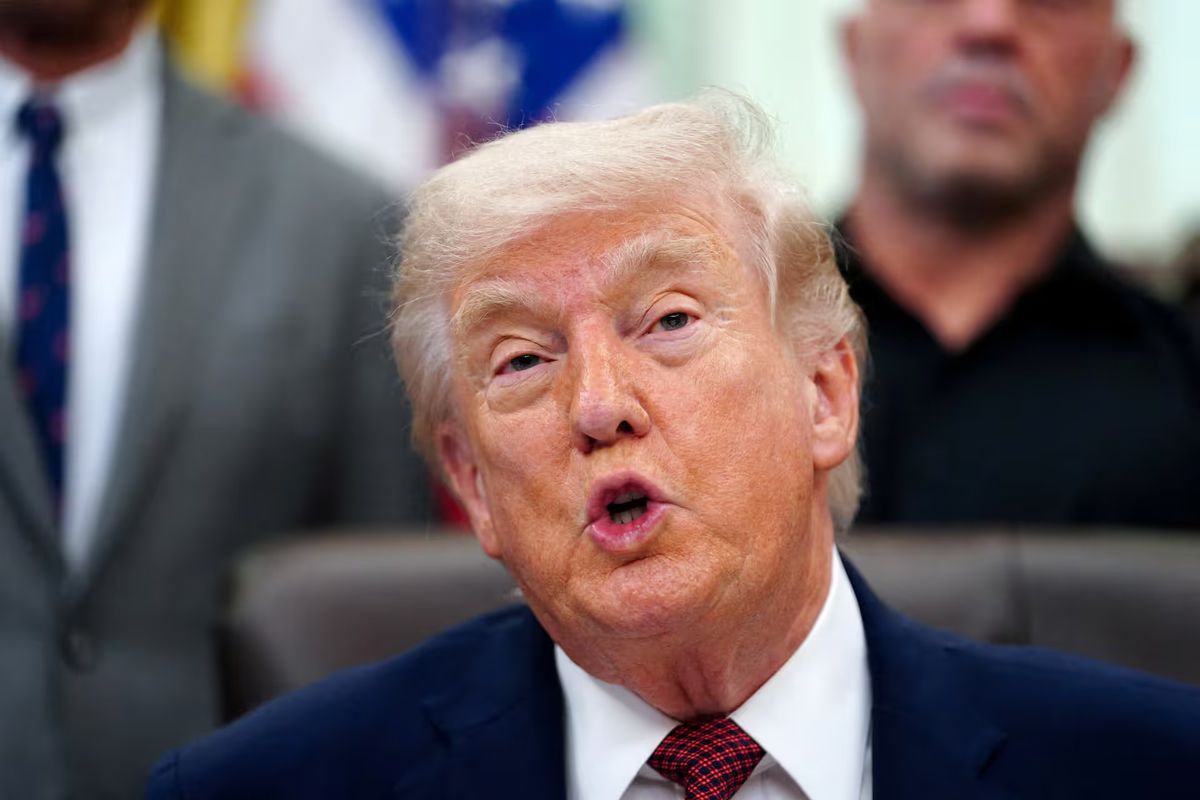
Iran's fighting for survival, Israel's fighting for vengeance and Donald Trump is fighting for narcissistic supply. It all started when the president tore up the Iran nuclear deal during his first term, because it was a signature achievement of Barack Obama.
We’re not speculating about Trump’s motives. “[T]he administration is set upon an act of diplomatic vandalism, seemingly for ideological and personality reasons - it was Obama's deal,” British ambassador Kim Darroch wrote in a diplomatic cable to the UK prime minister in 2018.
As you might expect, America’s withdrawal from the Iran deal freed up Iran to enrich a great deal of uranium. When Trump returned to office, he decided that Iran had way too much uranium and he needed to take heroic action to fix this problem of his own creation. His narcissism demanded that he get a better deal than Obama, but his inept real-estate negotiators couldn’t get him there. It’s doubtful that even the most skilled negotiators could have persuaded Iran to do more, but all hope was lost after Trump virtually abolished the State Department and sent his flunkies in lieu of professional diplomats.
Before you continue reading, I want to encourage you to subscribe to the Editorial Board. I know you like it. I know you'll love the price! For just $9 a month, you get so much, plus the satisfaction of supporting independent journalism. (Don't know if you're a subscriber? Check your status below.) –JS
In February, Trump decapitated the Iranian regime in the hopes of accomplishing what his predecessor could not. Trump demanded Iran’s unconditional surrender. Iran mocked him with AI-generated videos of Lego President Trump cavorting with Lego Pedophile Jeffrey Epstein and Lego Pete Hegseth swilling booze and committing rape. More consequentially, Iran picked off key oil infrastructure of America’s allies in the Persian Gulf. So far, none of Trump’s shopworn tactics have forced Iran to capitulate on nuclear enrichment, ballistic missiles, regional proxy forces or anything else.
The first round of peace talks in Islamabad disintegrated after Trump promised to negotiate based on Iran’s framework but reverted to maximalist demands as soon as he got the stock market-soothing headline that peace talks were underway. When Trump claimed last week that Iran had agreed to another round of talks, Tehran said they’d agreed to no such thing. Trump was trying to manifest talks by claiming Iran had agreed when it hadn’t. However, Iran is fighting an asymmetrical economic war against the US and it has no interest in helping Trump juice the market. On Sunday, the US fired on the Touska, a 900-foot Iranian cargo ship that allegedly tried to run the American blockade of the Strait of Hormuz. Iran has vowed to retaliate. Peace has never seemed further away.
The Strait of Hormuz is another self-made crisis for Trump. On February 27, the strait was wide open. Ships laden with oil and natural gas steamed safely through the narrow entry to the Persian Gulf without paying a cent. The next day, the US and Israel attacked. The day after that, the conduit for 20 percent of the world’s fossil fuel slammed shut. Iran soon imposed a system of tolls that the government moved to make permanent. Iranian lawmaker Mohammadreza Rezaei Kouchi said parliament was pursuing “a plan to formally codify Iran’s sovereignty, control and oversight over the Strait of Hormuz, while also creating a source of revenue through the collection of fees.” This newfound leverage “must continue to be used,” Supreme Leader Mojtaba Khamenei decreed. When asked when Iran might cede control of the strait, senior lawmaker Ebrahim Azizi answered, “never.”
Trump’s advisors had warned him that Iran would close the strait if attacked, but Israeli Prime Minister Benjamin Netanyahu assured him that he needn’t worry about it. The regime would collapse so fast it wouldn’t have time to close the strait, Netanyahu claimed during a February meeting in the Situation Room. “Sounds good to me,” Trump said. His advisors warned that Netanyahu was selling strategic snake oil, but Trump’s mind was made up.
Already subscribing? Give the EB as a gift!
Before the US blockade began on April 13, the hardline Islamic Revolutionary Guard Corps was extracting about $2 million per friendly ship, payable in crypto or Chinese yuan. This so-called “Tehran Tollbooth” could generate over $200 billion a year for Iran when normal traffic resumes. That’s money Iran could use to rebuild its shattered navy and accelerate its nuclear program. Moreover, being the toll booth operator would give Iran greater global influence than it would with nuclear weapons. Lots of countries have nukes, but only Iran has Hormuz. All this thanks to the hubris of Trump and Netanyahu.
Experts expect Iran to keep charging tolls after the war ends. “You can’t put the toothpaste back in the tube,” strategic energy analyst Clayton Seigle told the Times.
Trump saw dollar signs. He suggested the US and Iran might team up to extort the world. “We’re thinking of doing it as a joint venture,” Trump said in a greed-fuelled reverie. “It’s a beautiful thing.” Trump soon reversed course and threatened to destroy Iranian civilization if they didn’t reopen the strait immediately. Despite the genocidal threat, Iran kept right on blocking the strait. Trump offered a two-week ceasefire anyway. Unable to force the strait open, Trump’s next move was to seal it even tighter. The US Navy began blockading Iranian ports last Monday. On Friday, Iran opened the strait with the tollbooth intact, after Israel and Lebanon agreed to a ceasefire, only to shut it again because the US refused to call off its blockade.
Early in the war, the US was careful to blunt rising oil prices. It actually removed sanctions on Iranian oil on the grounds that it was more important to maintain global supply than to deny Iran the revenue. Now, Trump is taking the opposite tack, depriving the world of oil to put pressure on Iran. Trump wants a quick end to the war, but a blockade is at best a slow-acting poison that takes effect over weeks or months.
In the meantime, Americans face rising gas prices and accelerating inflation. The US Energy Information Agency forecasts that gas will average $3.70 a gallon for the rest of the year, as cracks widen in the global economy.
“In the past there was a group called Dire Straits,” Fatih Birol, the head of the International Energy Agency warned. “It’s a dire strait now, and it is going to have major implications for the global economy."
The International Monetary Fund warned last week that the conflict could cause a global recession. Ireland’s government may face a no-confidence vote after it called in the army to quell fuel protests. Europe is facing a catastrophic jet fuel shortage. Gas stations in Australia are running dry. Indonesia and Malaysia have ordered civil servants to work from home to conserve energy. “Just from a magnitude perspective, [the war’s impact on Asia] is really very, very, very large,” energy scholar Phillip Cornell told the New York Times.
Machiavelli wrote that "wars begin when you will, but they do not end when you please." Trump is desperate for an off-ramp, but Iran is in no hurry to give him one. The regime knows that now is Iran’s best chance to inflict pain on the west and thereby deter future attacks. The United States and Israel are running low on critical weapons that they lack the industrial capacity to replenish quickly. If Iran agrees to end war before inflicting major pain and securing significant concessions, it knows the United States and Israel will eventually replenish their missile supplies and come back at them later.
Trump’s war in Iran is a strategic disaster. His ego got him into this mess and his ego is preventing him from leaving. The world is at this madman’s mercy.
Lindsay Beyerstein is an award-winning documentary filmmaker, investigative journalist and judge for the Sidney Hillman Foundation, which honors excellence in journalism in service of the common good. Her forthcoming book, about conspiracy theories as a political rejection of the Enlightenment, is tentatively titled Against the Light: The Deep State Myth from the Illuminati to QAnon.