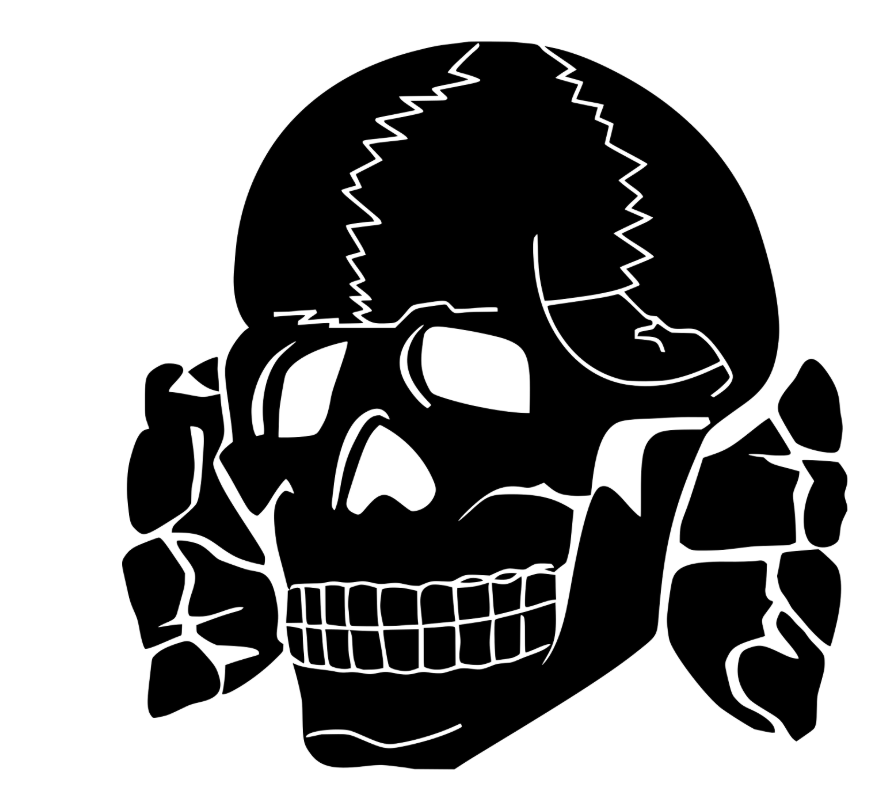
The Marine Corps probably told Platner what the Totenkopf is
The hate symbol likely prevented him from returning to active duty in 2009.

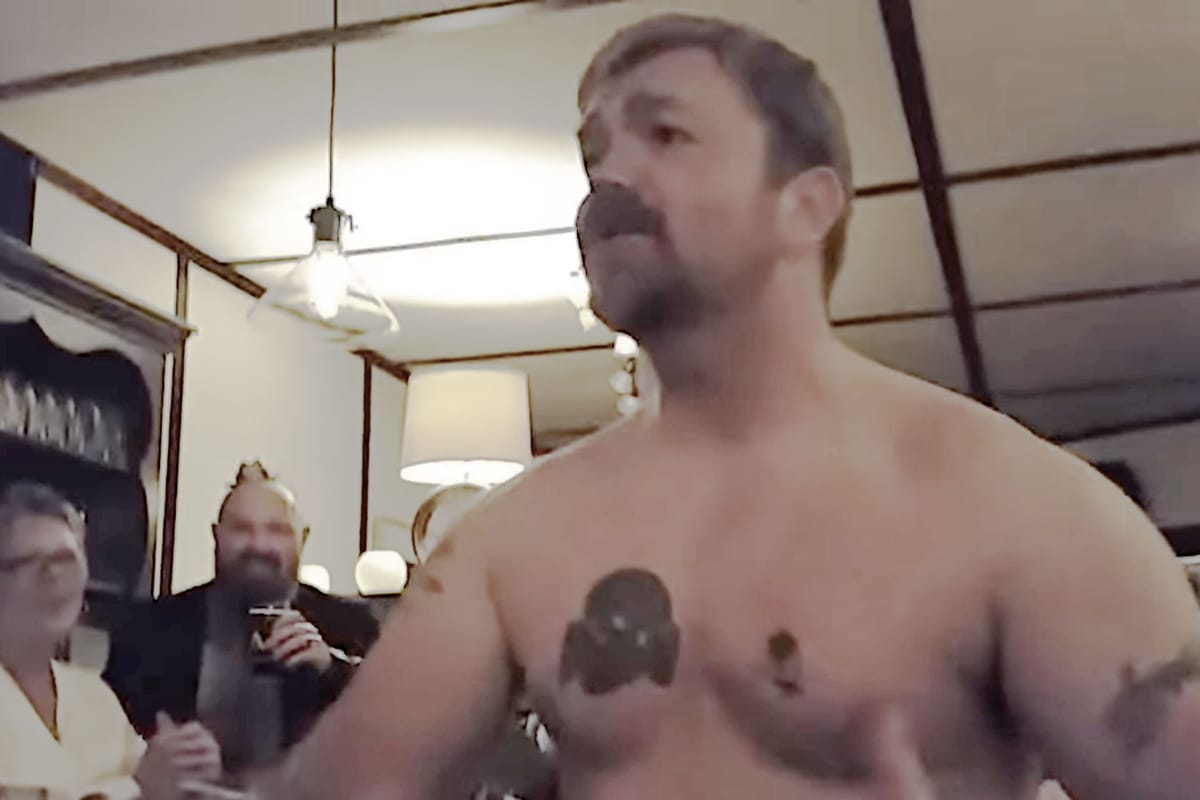
Graham Platner, a Democratic candidate for the United States Senate, can’t shake the story of his Nazi tattoo. Why? Because, among other things, he won’t apologize for getting it. He keeps saying he didn’t know it was a Totenkopf. He has nothing for which to be sorry.
This is not the deflection Platner appears to believe it is. Many Democrats in Maine and elsewhere are eager to forgive. If they can just get over this hurtle, they can give their full-throated endorsement of a candidate they believe is progressive and will fight the system.
But they can’t get over it until he apologizes. As a consequence, they’re going to keep giving him chances. Every time they do, the topic comes up and the Nazi tattoo story stays alive.
Before you continue reading, I want to encourage you to subscribe to the Editorial Board. I know you like it. I know you'll love the price. For just $9 a month, you get so much, plus the satisfaction of supporting independent journalism. Save 31% by subscribing for the year. (See below to check your status.) Click here to join the board today! –JS
“Just apologize”
I think the video below illustrates my point.
It’s a segment from Office Hours Live, a comedy podcast that was posted two weeks ago. The “caller” begins by observing that Platner keeps referring to the Totenkopf as “a skull-and-crossbones.” As a “World War II buff,” the caller asks, do you know what that symbol is called?
Platner says “I do – now,” laughing.
“So what is it?”
“It’s a Totenkopf.”
“What do you mean you do now, because if you’re a World War II history buff, I mean, have you ever seen Indiana Jones?”
“I was well-aware that they used a similar-looking thing.”
“But you have to admit, it’s not a similar-looking thing. It’s the same thing. You keep sort of dodging around it.”
“I’m not trying to dodge.”
“I would like you to admit you got a Nazi tattoo and just apologize, instead of saying it can be interpreted that way.”
“I can’t, because I didn’t.”
Courtesy of Office Hours Live.
Here, to be clear, Platner means to say he can’t apologize, because he didn’t know it was a Totenkopf. He then says “half my family is Jewish.” He then recounts that time years ago when he sang shirtless at his brother’s wedding, where everyone saw the Totenkopf, the clear implication being that if his Jewish family didn’t mind, it must be all right.*
The exchange is interrupted by the host of Office Hours Live, who says he’s also a history buff but didn’t know what the tattoo was. The caller says, “I believe you on that,” before saying: “I don’t think it’s that hard to apologize for a tattoo. There hasn’t really been an apology. There’s just been ‘I’m sorry if it resembles a hate symbol." To which, Platner says:
“I am not going to apologize for something I didn’t know about.”
“You had it for 18 years, bro,” the caller replies in disbelief.
The host ends the exchange by addressing the caller directly:
“I think he’s spoken on it. You can decide not to believe him.”
That’s just the thing, isn’t it? The caller clearly wants to believe Platner. This exchange captures the eagerness in the caller’s voice, almost to the point of pleading with him, as if to suggest that if only Platner would apologize, they could all move on together.
But supporters who want Platner to apologize might be giving him too credit.
The Marines knew
“Capitol Hunters” is the name of the social media account that identified and documented the paramilitaries involved in sacking and looting the United States Capitol on January 6, 2021. Last Friday, the anonymous sleuth released a timeline and fact-sheet on Platner.
It looks like he lied, not once but twice.
The first lie was about why he couldn’t get back into United States Marine Corps active duty service in 2009. He tried, he said, but due to a change in Marine Corps policy, his forearm sleeve tattoo disqualified him. So he joined the Maryland National Guard instead.
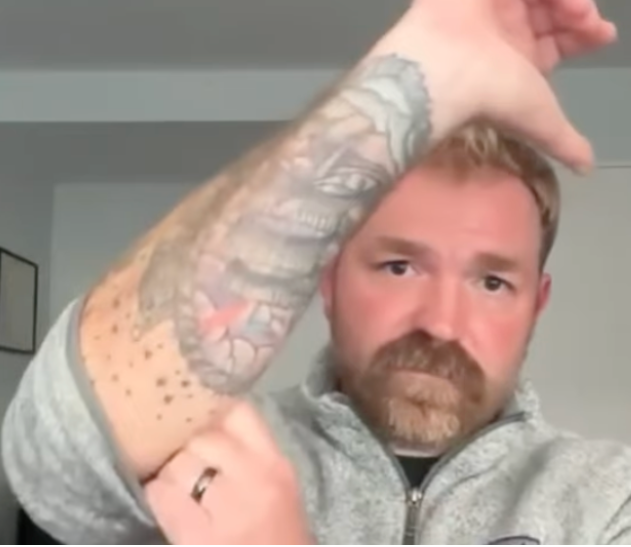
While the Marine Corps did change its tattoo policy in 2007, according to Capitol Hunters, the change didn’t apply to Graham Platner. By 2009, at the peak of the Iraq War, the Marines needed servicemen. So the new policy grandfathered in existing forearm sleeve tattoos.
There was one exception, though, as Capitol Hunters wrote:
“The only non-exempt tattoos were those in a new prohibited category: tattoos that were racist or associated with extremist groups. That is, the only tattoo Platner had in 2009 that would bar him from the Marines was the Nazi Totenkopf on his chest.”
The Marines told Platner
Which brings us to the second lie.
In 2007, when he got the Totenkopf, Platner was still on active duty. At that point, according to Capitol Hunters' fact-sheet, “his commanding officer was required to produce a photographic documentation of all his existing tattoos; Platner would have signed it.”
In 2009, when he tried returning to active duty, “the enlistment office would have reviewed his tattoos for compliance. Even if Platner did not know the Totenkopf’s significance when he got the tattoo in 2007, he would have been told its meaning by 2009. An officer trained in identifying and weeding out extremist symbols would not miss a Totenkopf.”
So to recap:
After trying in 2009 to return to active duty, Platner could not have been ignorant of the full meaning of the Totenkopf, because the Marine Corps would have explained that it was the Totenkopf itself that prevented him from returning. At that point, he could have decided to cover it up, but chose not to – despite knowing the meaning of Totenkopf. Instead, he joined the National Guard, presumably because it does not vet tattoos as carefully as the Marines.
“Secret Nazi” is beside the point
There’s another thing Graham Platner knew long before his Senate campaign began: he has a long paper trail. Somewhere in the Marine Corps archives is a thick file with his name on it containing photos, signatures and other documents that establish every interaction he had with the Marines about his tattoos. Those files are just waiting for Platner’s political opponents. God help him if he thinks privacy laws are going to keep them out of public view.
In getting ahead of the tattoo controversy, Platner went on a friendly podcast. He shared a video of himself singing shirtless at his brother’s wedding. He told the host “I am not a secret Nazi.” Those acts are going to look different after Republican Susan Collins or Democrat Janet Mills credibly alleged that the United States Marines Corps told him what the Totenkopf is in 2009 and that he chose his Totenkopf over returning to active service?
Whether he’s a “secret Nazi” is beside the point.
The point is authenticity.
Platner has convinced many progressive Democrats that he’s an authentic working-class Mainer who represents change. He has weathered the tattoo issue in part by encouraging them to see it as an attempt by Democratic insiders and others to defend their interests.
His message is “trust me to fight for you.” Even US Senator Rueben Gallego is buying it. “I think right now what people need and want is authenticity,” he said in his endorsement.
What kind of authenticity is based on a lie?
As a Democratic candidate for the Senate, Platner says he will fight the system in the name of the American people. But it was the system itself that likely told him, in 2009, that the Totenkopf is no ordinary skull-and-crossbones; that it’s a symbol of hatred, violence and mass death; that displaying it is illegal in some parts of the world; and that, by choosing to keep it, Platner barred himself from returning to active duty service in the Marines.
He says he will fight the system, but it’s fair to ask which system he’s fighting.
Are promises made promises kept?
As I said at the top of this piece, there are many progressive Democrats in Maine who really want to support Graham Platner. They like his stated principles. They like his attitude. They like his regular-guy vibe. He’s a breed they haven’t seen before. If he would "just apologize" for getting a Nazi tattoo, the issue could end. Everyone could move forward in solidarity.
But with the Capitol Hunters' reporting comes new questions.
Did he cover up the Totenkopf only because he realized it was a liability? Did he seem to endorse political violence while knowing he bore the mark of political violence. Did he sing at his Jewish brother’s wedding knowing that it’s the height of antisemitic symbolism? What kind of brother would do that anyway? And was he just lying to that caller's face on Office Hours Live when he said, "I am not going to apologize for something I didn’t know about.”
His defenders say there are things more important than the Totenkopf. They are right. More important than whether Platner is a “secret Nazi” is the question of whether he means what he says – and whether, in the event of victory, promises made are going to be promises kept.
* Talking Points Memo’s Hunter Walker put Platner’s claim that “half my family is Jewish” in a fuller context. First, his wife has been said to be Jewish. She isn’t. Second, the Platner name itself is not Jewish.
Moreover, Platner is evidently talking about the family of his step-father, Joel Frantzman. The brother at whose wedding he sang shirtless with Totenkopf showing is Seth Frantzman. Seth Frantzman almost certainly would have recognized its meaning, as he has a PhD in political science from Hebrew University in Jerusalem. He heads a think tank called the Middle East Center for Reporting and Analysis and writes for the Jerusalem Post.