Did the Republicans' 'fever' over Obama's election finally break?
After 2026, New England is shut to Republicans, but the South is open to Democrats.

In analyzing a landslide midterm, most of the focus has rightly been on the American South. However, there are lessons to be learned elsewhere. After Democrat Troy Jackson defeated Susan Collins in Maine, there will be no Republican senators from New England next year.
In fact, no state in the region – Maine, New Hampshire, Vermont, Massachusetts, Rhode Island and Connecticut – will send any Republicans to the US Congress, either to the Senate or the House of Representatives. There is only one exception. Maine is sending former Governor Paul LePage to the House to represent its 2nd Congressional district.
The Boston Globe called that fact “supremely ironic.” Though the midterms were for New England a wholesale rebuke of the president and what he stands for, “LePage claims he was Donald Trump before there was Donald Trump. LePage likes to threaten people and routinely says outrageous, bigoted things. He and his hero are like peas and carrots.”
[Leave a tip in the tip jar! Say $10? THANKS!]
New England and the South are inverse reflections of each other. The South used to be home of the slavers. The Democrats were their primary vehicle. New England used to be home of the abolitionists. The Republicans were theirs. (The GOP arose from the ashes of the Whig Party to gain power with Abraham Lincoln’s victory in 1865.) Each region changed in phases over time as the country fought over the role of minority rights and freedoms in national politics, especially those of Black Americans. The South moved from blue to red. There were zero Democratic senators after 2014. New England moved from red to blue. There will be zero Republican senators after 2026, completing a process begun over 160 years ago.
The bluing of New England didn’t stop at the federal level. While Arizona, Pennsylvania, Michigan, Wisconsin, Minnesota and Nevada saw their state governments flip from partial to total control by the Democrats, here in Connecticut, the Democrats were already the majority. Thanks to Trump, however, state and local Republicans are being driven to despair.
Next year, the Connecticut Senate will have the largest Democratic majority in 140 years, the New Haven Register said. Of the 36 seats in the state Senate, either 32 or 33 will be Democrats. (One election is still pending). There will only be either three or four Republican Senators. Meanwhile, the state House will have the biggest Democratic majority since 1975 – since the Watergate scandal. Of the 151 state House seats, as many as 118 will be Democrats.
Ned Lamont did more than become the second Connecticut governor to win three consecutive terms. He won with the largest margin by a Democrat in the last five decades. His first margin was three points. His second, 13. His third, 18. You could argue that Ned Lamont has been touched by an angel. Every time he campaigned for governor, Donald Trump was in the background. Just 10 years ago the Connecticut Senate was tied, 18-18. In 2016, the state House had 79 Democrats and 72 Republicans (then out of a total of 150 seats). What happened during that decade-plus? Trump did. He destroyed the Connecticut GOP.
Connecticut Republicans are going to be in the same pickle that Republicans in other blue states will be in – between a past chained to Trump and a hoped-for future unchained from him. One big problem is rightwing media and rightwing organizations. Despite Tuesday’s defeat, they continue to punish Republicans for disloyalty while making it impossible for them to distance themselves from the most unpopular president since Herbert Hoover.
A leading Republican in Arizona called Turning Point USA, the group founded by the late demagogue Charlie Kirk, “a destructive force” that’s “driving us to extinction,” comparing it to a parasite that is slowly killing its host. A leading Republican in the New York State Assembly, after watching GOP-held offices turn blue and the number of US congresspeople erode from seven to six (out of 26), said that the New York Republican Party needs “an enema.”
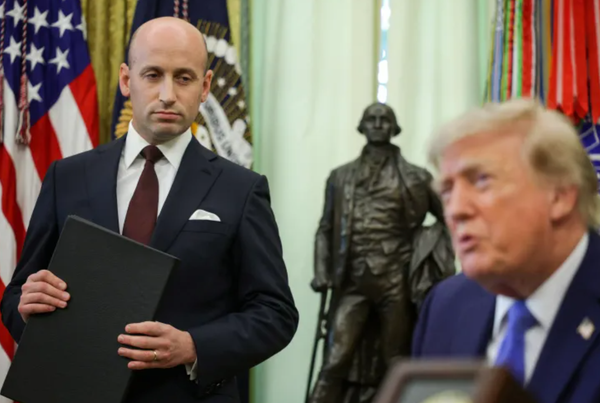
Of course, the primary problem is Donald Trump. The Republicans were routed in part by a Hispanic backlash against his murderous deportation program. Yet Friday, he promoted Stephen Miller, the architect of that white-supremacist purge. Meanwhile, the president is trying to hold together a fracturing coalition by issuing threats against its component parts. In a memo released last week to more than 3,000 rightwing groups, the White House warned Republicans against blaming Trump for the election wipeout, adding that “we are monitoring statements, press releases, and media engagements from your organizations.”
At some point you would expect self-preservation to kick in, and perhaps we are seeing that from Ron Johnson. Earlier this year, after the murders of Renee Nicole Good and Alex Pretti, he opposed Democratic efforts to put limits on ICE. After the midterms, however, the senator from Wisconsin said there is corruption “within the Trump administration.” He didn’t call out Trump by name, only unidentified White House aides who are allegedly catering to corporate interests, not the people’s interests. Johnson is up for reelection in 2028. He said his party must “embrace the enduring principles of our founders, limited government.”
If Johnson is going to win reelection in a state that’s blue and getting bluer, he has to convince Wisconsinites that he was never the authoritarian that he in fact was, but instead a “constitutional conservative” the whole time. To do that, however, he has to walk the same tightrope every Republican in every blue state walks. To Republican voters, he must persuade them that he’s still loyal to Trump. To everyone else, that he doesn’t carry Trump's stink.
The midterms finished a long process. New England used to be completely red. More than 160 years later, we are completely blue (with one “supremely ironic” exception). Meanwhile, the midterms have opened a new chapter. After eight years without sending a Democrat to the Senate, the South is going to send four (presuming Mississippi's Scott Colom wins).
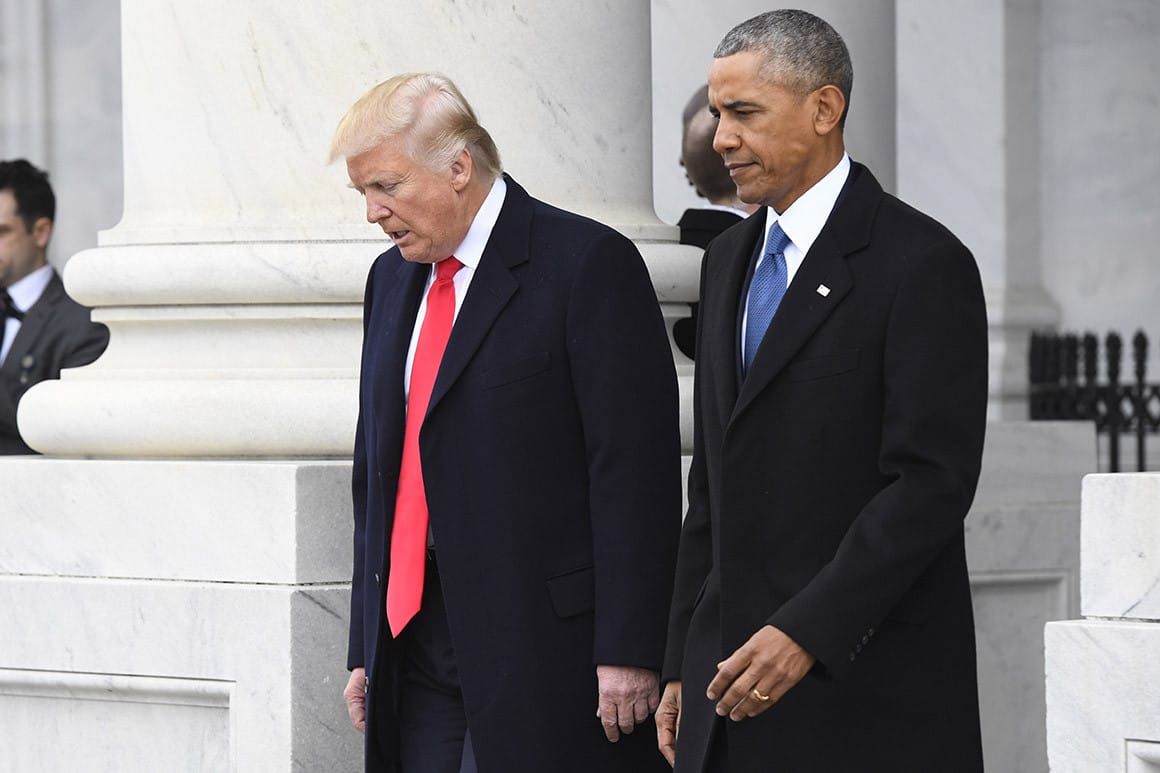
Trump broke the Solid South. New England is shut. Other regions of the country are closing. At the same time, Republican survivors at least appear to see the need to change course. In 2012, Barack Obama talked about a future when the GOP's fever over the election of the first Black president would break. I don’t want to get ahead of myself, but maybe it’s breaking.